

Golf Club Vehicles are vehicles used within golf clubs for player transportation, member reception, caddie services, and course maintenance. Golf courses need to strategically allocate vehicles for different purposes.
Player Vehicles
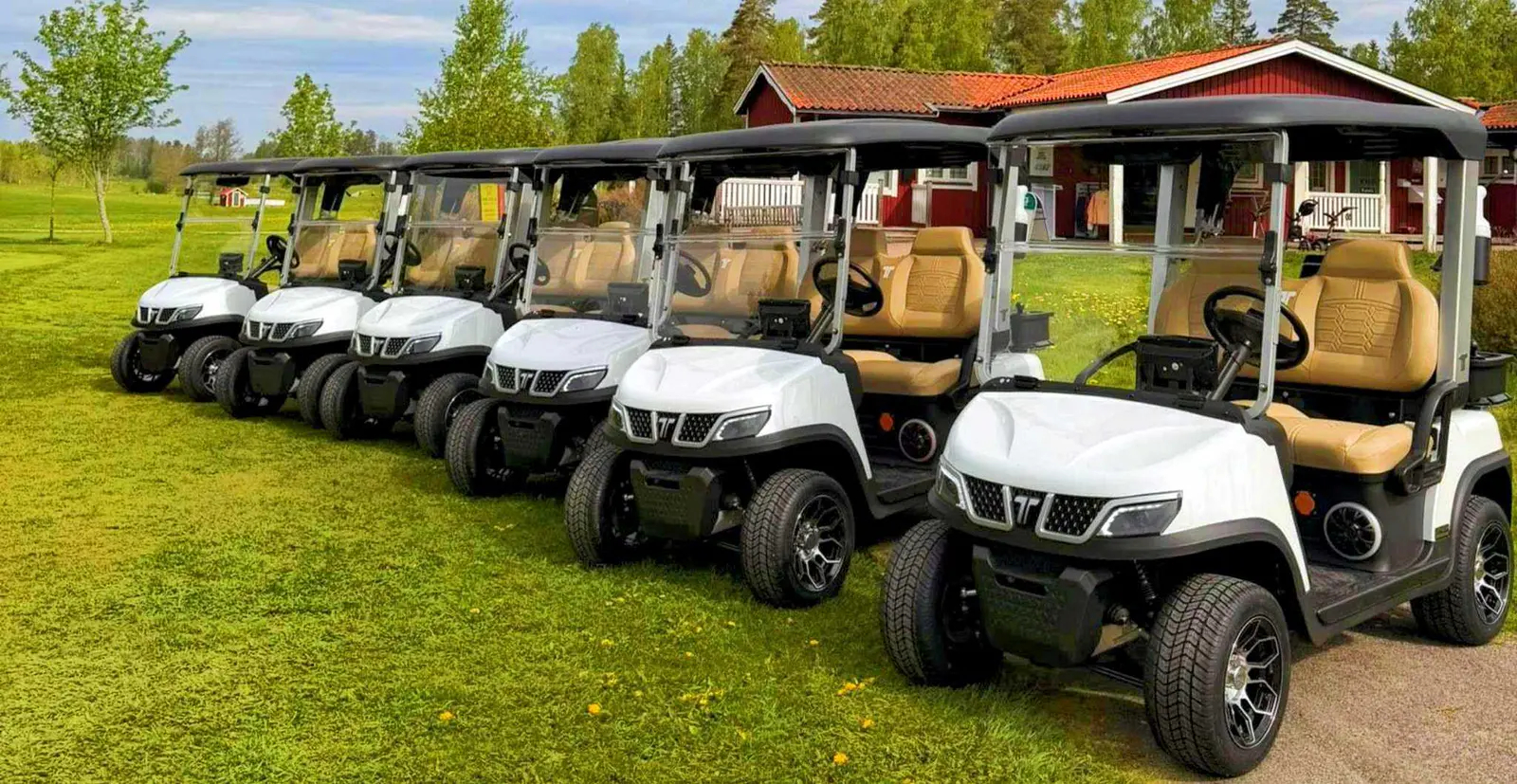
Standard two-seater electric golf cars remain the mainstay of the course fleet, primarily used for moving two players and their bags between holes.
TARA Medium Speed Vehicles’ Spirit Pro and Spirit Plus are both two-seater models. The Spirit Plus emphasizes comfort and a higher-spec experience; the Harmony adds a rear caddie stand, suitable for clubs providing caddie services.
For most courses, these vehicles typically make up the majority of the golf car fleet.
Reception Vehicles
Not all golf club vehicles are used for official rounds.
Four-seater vehicles are better suited for member reception, course tours, event staff transportation, or resort shuttles. The Tara Roadster 2+2 features a four-seat layout and lithium-ion battery power, suitable for use on the course and other low-speed scenarios.
Therefore, when purchasing vehicles, golf courses should plan for “playing vehicles” and “reception vehicles” separately, rather than requiring the same model to perform all tasks.
Maintenance Vehicles
The greens team needs to carry tools, fertilizer, equipment, and maintenance supplies, making ordinary medium speed vehicles less suitable.
Golf Utility Vehicles, equipped with cargo beds, are better suited for course maintenance. The Tara Turfman 450 is designed for course maintenance and equipment transport; the Turfman 700 offers a larger cargo bed and can handle heavier material transport; the Turfman 1000 is further geared towards higher-load maintenance tasks.
Therefore, a complete golf club vehicle system typically requires the combined use of player vehicles and utility vehicles.
Lithium Batteries and GPS
For fleets operating frequently every day, power and management methods are equally important.
TARA Medium Speed Vehicles currently offers lithium-ion battery-powered Electric Medium Speed Vehicles and Utility Vehicles, as well as a Medium Speed Vehicle GPS fleet management solution.
GPS systems are suitable for courses with a large number of vehicles, used for centralized management of vehicle location and operational status. Lithium-ion battery-powered vehicles reduce routine maintenance tasks such as water replenishment for traditional lead-acid batteries. However, the specific configuration still needs to be determined based on the course slope, daily rotation, and charging conditions during procurement.
Tara Vehicle Solution
TARA Medium Speed Vehicles’ product line covers the Spirit series of two-seater medium speed vehicles, Harmony caddie vehicles, Roadster 2+2 multi-person vehicles, and the Turfman series of utility vehicles.
This means that golf courses can establish different Golf Club Vehicle configurations based on roles: players use two-seater vehicles, receptionists use four-seater vehicles, and maintenance teams use utility vehicles, with GPS used to manage part or all of the fleet.
For club procurement personnel, the real challenge is comparing which vehicle best suits the corresponding operational tasks.
FAQs
What vehicles are commonly used at a golf club?
Common vehicles include two-seater medium speed vehicles, multi-person reception vehicles, vehicles with caddie stands, and golf utility vehicles. Large courses often use a combination of vehicle types.
What is the difference between a medium speed vehicle and a utility vehicle?
Medium speed vehicles are primarily used for transporting people and golf bags; utility vehicles emphasize the transport of goods, tools, and equipment, and are typically equipped with a rear cargo bed.
Are electric medium speed vehicles better for golf courses?
For courses with charging facilities, electric medium speed vehicles operate quietly and require less mechanical maintenance. Their suitability depends on the terrain, operational intensity, and charging infrastructure.
How many medium speed vehicles does a golf club need?
This should be calculated based on the number of daily tee rounds, peak usage, the proportion of reserve carts, and tournament requirements, rather than simply the number of holes.
Does a golf club need GPS fleet management?
Clubs with a large number of vehicles and requiring unified dispatch or data management are better suited to using medium speed vehicle GPS.
Post time: Aug-12-2026